
Blog Post
Arborvitae Alternatives for Western MA and Northern CT Privacy Screens
October 12, 2026
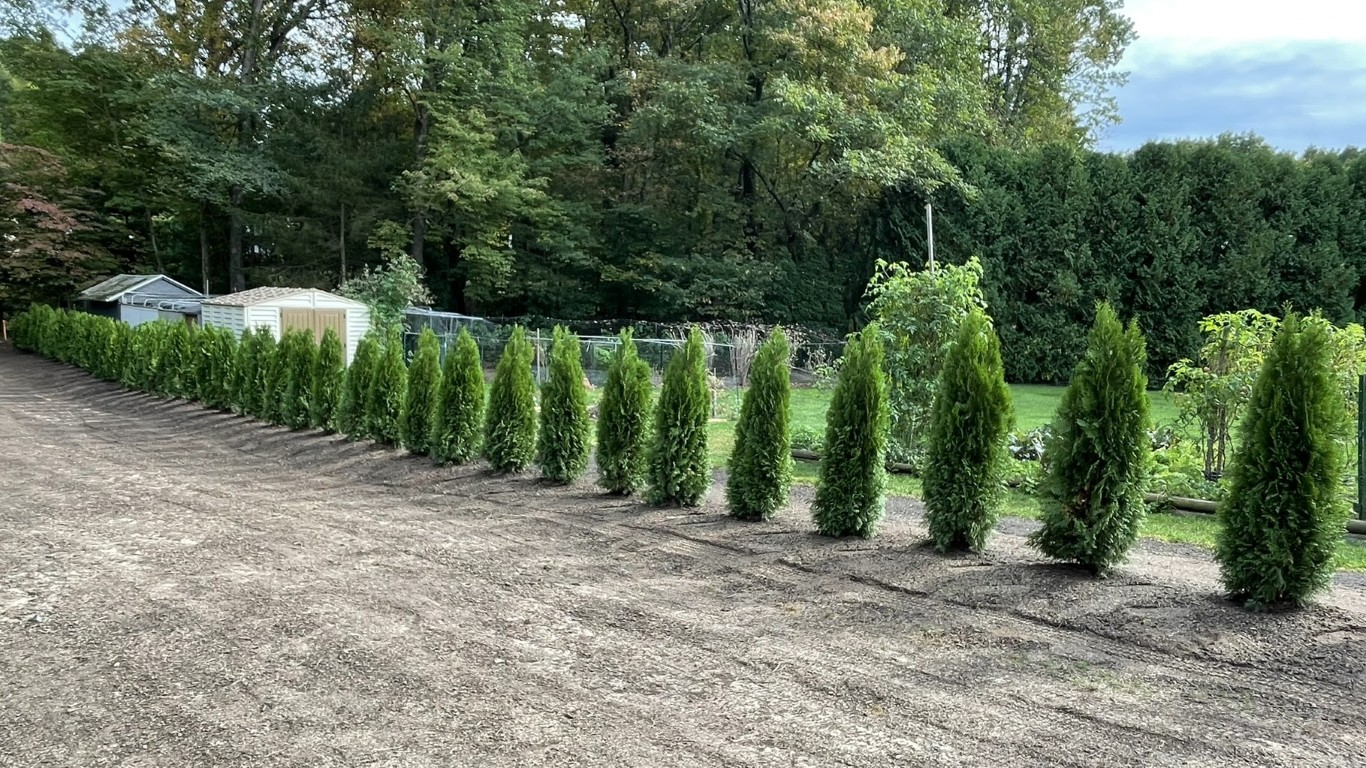
Emerald Green arborvitae is the default privacy hedge in neighborhoods from Westfield to Glastonbury. It’s narrow, it stays green all year, and every garden center stocks it. It also has a habit of looking great for three years and then turning bare at the bottom, bent at the top, or brown in patches.
If you’re planning a new screen this fall or replacing one that didn’t make it through last winter, there are better choices for our area. Here’s what we’d look at instead, and where each one fits.
At a Glance
- Deer browsing and heavy snow are the two main reasons arborvitae hedges fail in western Massachusetts and northern Connecticut.
- Eastern red cedar, upright junipers, and spruces are the strongest tall evergreen alternatives for sunny lots.
- Mountain laurel, inkberry, and Japanese pieris are better suited to shade and mid-height screens.
- A mixed screen of two or three species holds up better than a single row of one plant.
- Early fall is a good time to plant evergreens here, as long as they have several weeks to root before the ground freezes.
Why Homeowners Here Tend to Skip Arborvitae
Deer Eat It
Arborvitae is one of the most common winter food sources for deer in New England, along with yew, rhododendron, and holly. When snow covers everything else, deer strip the lower branches and leave a green top on a bare trunk. Being close to the house doesn’t stop them in late winter. Lots that back onto woods or farmland, which describes a lot of properties in Southwick, Granby, and Simsbury, see the worst of it.
Emerald Green takes the worst of it. Green Giant and Dark American, covered below, hold up much better.
Snow Splays It
Columnar varieties like Emerald Green don’t handle heavy snow or ice well. Branches bend outward under wet snow, and some never return to their original shape. Our December storms, which start as rain and turn to heavy snow, are especially hard on them.
Pests and Disease Find It
Spider mites, bagworms, scale, leaf miners, and fungal problems all affect arborvitae. None of these are unusual, but a hedge of 30 identical plants gives a pest problem plenty of room to spread.
A Single-Species Hedge Fails All at Once
When one plant fills the entire screen, a bad winter or a pest outbreak can open gaps along the entire property line.
Arborvitae Alternatives Compared
| Plant | Type | Typical Mature Size | Light | Deer Resistance | Best Use |
|---|---|---|---|---|---|
| Eastern red cedar | Native needled evergreen | 30–40 ft tall, 8–15 ft wide | Full sun | Good | Tall screen, dry or sandy soil |
| Upright juniper (‘Spartan’) | Needled evergreen | 15–20 ft tall, 5–6 ft wide | Full sun | Good | Narrow side yards |
| Serbian spruce | Needled evergreen | 40–60 ft tall, 15–25 ft wide | Sun to part shade | Good | Tall, slender screen |
| Norway spruce | Needled evergreen | 40–60 ft tall, 25–30 ft wide | Full sun | Good | Large lots, windbreaks |
| Green Giant arborvitae | Needled evergreen | 40–60 ft tall, 12–20 ft wide | Sun to part shade | Moderate | Arborvitae look with more size |
| Dark American arborvitae | Needled evergreen | 20–30 ft tall, 5–10 ft wide | Sun to part shade | Moderate | Budget screen on long property lines |
| Mountain laurel | Native broadleaf evergreen | 5–15 ft tall and wide | Part shade | Good | Shaded borders |
| Inkberry | Native broadleaf evergreen | 5–8 ft tall and wide | Sun to part shade | Moderate | Informal hedge, wet soil |
| Japanese pieris | Broadleaf evergreen | 9–12 ft tall, 6–8 ft wide | Part to full shade | Very good | Shade near the house |
Sizes are typical ranges. Cultivars vary, so check the tag for the plant you’re buying.
Best Tall Evergreen Alternatives for Sunny Yards
Eastern Red Cedar
Eastern red cedar is probably the closest thing to arborvitae you can grow here. It’s a native evergreen with the same scale-like foliage; it handles drought and sandy soil well; and deer usually leave it alone. Birds like cedar waxwings eat its blue, berry-like cones.
Note: Eastern red cedar is an alternate host for cedar apple rust. If you have apple or crabapple trees on your property, plant something else.
Upright Juniper
‘Spartan’ and similar upright Chinese junipers give you a narrow, dense column without the snow problems of Emerald Green. They tolerate dry soil and deer well, and their slim shape suits side yards and driveways where you don’t have room for spread. Like red cedar, they’re susceptible to cedar apple rust, so keep them away from apple trees.
Serbian Spruce
Serbian spruce is one of the best choices for a tall screen on a mid-sized lot. It grows in a slender spire rather than the broad cone of most spruces, and its drooping branches shed snow instead of holding it. Spruce needles are stiff and prickly, which keeps deer away.
Norway Spruce
For large properties, open fields, or road frontage, Norway spruce grows quickly and makes a dense windbreak. It needs space. Plant it too close to a fence or driveway, and you’ll be pruning it back for years. It’s a good fit for the bigger residential lots in towns like Southwick, Suffield, and Wilbraham.
Green Giant Arborvitae
If you like the arborvitae look, Green Giant is a hybrid that grows much larger and faster than Emerald Green. It’s hardy in zones 5 through 8 and generally less appealing to deer, though hungry deer will still browse it. The tradeoff is size. At maturity, it can be wider than a car, so it doesn’t work in narrow spaces.
Dark American Arborvitae
If you want arborvitae, pick this one. We plant hundreds of Dark American every year and haven’t had deer damage on any of them in several seasons. Even in a hungry winter, deer go for almost everything else first. It’s also the least expensive hedgerow on this list. A long row does look a bit commercial, so it suits a back property line better than a screen facing your patio.
Best Alternatives for Shade and Mid-Height Screens
Mountain Laurel
Mountain laurel is Connecticut’s state flower and one of the few native evergreen shrubs deer mostly ignore. It grows well in part shade with moist, acidic, well-drained soil, and blooms in white-to-pink clusters in late spring. Use it where tall conifers won’t get enough sun, like along a wooded property line.
Inkberry
Inkberry is a native evergreen holly with small, glossy, spineless leaves. It’s one of the best native shrubs for an informal hedge and does well in both wet and well-drained soil, which makes it useful in low spots where other evergreens rot. Heights vary a lot by variety, so choose one that matches the height you need.
Japanese Pieris
Japanese pieris grows up to about 10 feet and handles deep shade better than most evergreens. It flowers in early spring, and deer rarely touch it. It prefers the same acidic soil as rhododendrons, so if those do well in your yard, pieris will likely do well too.
Plants to Skip in This Area
A few common privacy plants cause more trouble than they’re worth here:
- Eastern hemlock: Hemlock woolly adelgid has killed or weakened hemlocks across Massachusetts and Connecticut.
- Yew: It shears into a tidy hedge, but deer treat it like a buffet.
- Burning bush and Japanese barberry: Both are banned from sale in Massachusetts and listed as invasive in Connecticut.
- Leyland cypress: It’s popular farther south but is marginally hardy in our winters and prone to canker.
Why a Mixed Screen Holds Up Better
The most reliable privacy screens we see in this area aren’t a straight row of one plant. They combine two or three species planted in a staggered pattern, with taller conifers in back and broadleaf evergreens or shrubs in front.
A mixed screen has a few advantages. If deer find one plant, the others still block the view. A pest that targets junipers won’t touch your inkberry. And a layered planting looks more natural than a green wall, which matters if the screen faces your patio or pool.
On a typical backyard lot, that might mean Serbian spruce or eastern red cedar along the back line, with inkberry or mountain laurel filling in the lower gaps. On a narrow side yard, alternating ‘Spartan’ juniper with a compact inkberry works well. Your soil, sun, and distance from the property line will shape the final mix, which is where a site visit helps.
When to Plant a New Privacy Screen
Evergreens planted in early fall have warm soil and cooler air, which gives roots time to settle before winter. The goal is to get them in the ground with several weeks to spare before the soil freezes, then water them consistently until it does. Spring planting also works, especially for broadleaf evergreens like mountain laurel and pieris.
For a month-by-month look at timing in our region, see our guide to the best time to plant in New England.
Before You Plant
- Measure how far the screen will sit from the property line, fence, driveway, and house, and compare that to each plant’s mature width.
- Note how many hours of direct sun the planting area gets.
- Check for wet spots, sandy patches, or heavy clay.
- Look for apple or crabapple trees nearby before choosing juniper or red cedar.
- Walk the area in winter if you can, and look for deer tracks or browsed shrubs.
- Check for overhead wires, septic fields, and underground utilities.
- Decide how tall you need the screen to be and how soon you need it.
Plan Your Privacy Screen With Tynic
Tynic Landscaping has designed and installed plantings for homeowners across western Massachusetts and northern Connecticut since 2007. Scott Lamon started the company with a truck and a few tools, and he’s still in the field with our crews today. We’ll look at your sun, soil, deer pressure, and space, then recommend a screen that fits your property and holds up through our winters.
Learn more about our plant installation services, or call us at 413-569-9633 to book a consultation.
Frequently Asked Questions
What is the best arborvitae alternative for deer?
Japanese pieris, eastern red cedar, upright junipers, and spruces are among the most deer-resistant evergreens for our area. No plant is completely deer-proof, but these usually escape damage except in the hungriest winters.
What grows faster than Emerald Green arborvitae?
Green Giant arborvitae and Norway spruce both grow much faster than Emerald Green. Both also get much larger, so they need more room.
What is a good native alternative to arborvitae in Massachusetts?
Eastern red cedar is the closest native match for tall, sunny spots. For shade or wet soil, mountain laurel and inkberry are good native options.
What privacy plants grow well in shade?
Japanese pieris tolerates deep shade, and mountain laurel does well in part shade. Serbian spruce and inkberry handle part shade better than most tall conifers.
Why are my arborvitae turning brown?
Browning often comes from winter burn, drought stress, spider mites, or fungal disease. Bare lower branches with healthy tops usually point to deer browsing instead.
Can I plant a privacy screen in the fall?
Yes. Early fall is a good time to plant evergreens in western Massachusetts and northern Connecticut, as long as they go in several weeks before the ground freezes and get regular water until then.
Share with your followers: