
Blog Post
How Much Does Hardscaping Cost?
July 21, 2026
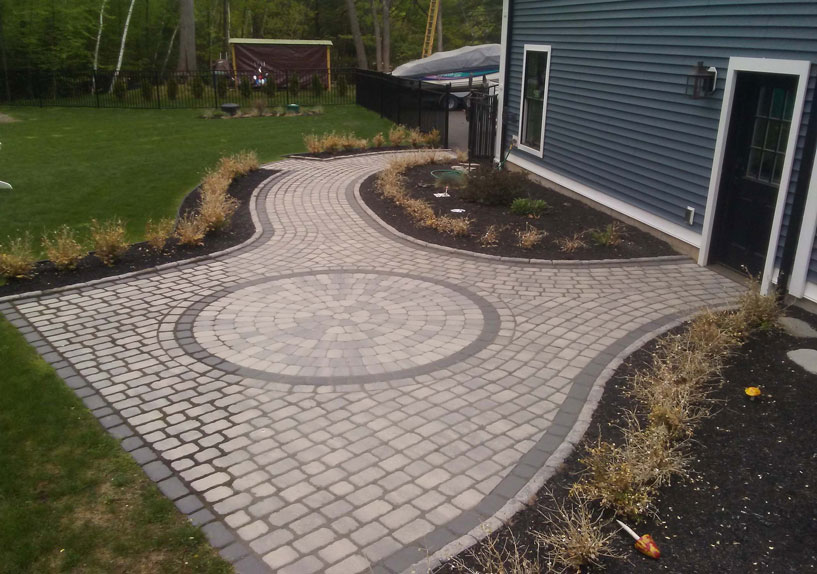
Key Takeaways
Hardscaping in western Massachusetts and northern Connecticut runs about $18 to $40 per square foot installed for a patio, which puts most projects between roughly $7,000 and $30,000 once size and material are factored in.
That is higher than the national figures you will find online because our frost line calls for a deeper base than milder regions need. Concrete pavers are the most affordable surface; natural stone is the priciest. Retaining walls, walkways, fire features, and outdoor kitchens each add to the total, and bundling them into one build almost always costs less than adding them later.
How Local Pricing Compares
A patio is where most hardscaping budgets start, so it is the clearest place to anchor a number. In western Massachusetts and northern Connecticut, a professionally installed paver patio runs about $18 to $40 per square foot, with most homeowners landing between $20 and $30.
National cost guides put the same work at $8 to $25 per square foot, and some list an average paver patio at around $3,800. If you have been reading those, a local quote can come as a surprise.
| Surface material | National average (per sq ft) | Western MA / northern CT (per sq ft) |
|---|---|---|
| Concrete pavers | $10 to $17 | $18 to $28 |
| Brick | $12 to $20 | $20 to $30 |
| Natural stone (bluestone, flagstone) | $15 to $30 | $25 to $40 |
| Poured concrete slab | $6 to $15 | $12 to $18 |
The national columns are not wrong. They average every market in the country, including regions with mild winters and shallow frost lines where a patio can sit on four inches of base. New England is not one of those regions, and that single difference explains most of the spread. More on that below.
What Does a Paver Patio Cost?
Patio pricing depends on how big it is and what it is made of. A larger patio costs more in total but often less per square foot, because the crew mobilizes once and the fixed costs of base prep and setup spread across a larger area. A small patio can carry a higher per-foot rate for the same reason.
| Patio size | Typical use | Installed cost |
|---|---|---|
| Small (100 to 200 sq ft) | Seating nook, grill area | $2,500 to $7,000 |
| Medium (300 to 400 sq ft) | Dining and lounging | $7,000 to $16,000 |
| Large (500+ sq ft) | Full outdoor living space | $12,000 to $30,000+ |
Material sets the tone and the price ceiling.
- Concrete pavers are the most popular choice here and come in dozens of colors and patterns. Individual pavers flex with the ground through freeze-thaw cycles instead of cracking the way a solid slab can. They ask for a little upkeep over time, like re-sanding and the occasional seal.
- Brick offers the classic New England look and holds its color because it is fired clay.
- Natural stone like bluestone sits at the top of the price range and looks the most upscale, with a price to match.
Why Your Local Quote May Be Higher Than the National Number
Most of a patio’s cost (and nearly all of its lifespan) comes from the part you never see. A base built for milder climates, four or so inches of compacted stone, cannot keep a patio level through our winter cycles. Here, a patio that lasts requires eight to twelve inches of compacted base with drainage built in.
Roughly 80% of a patio’s long-term success comes from the base, not the surface. A thin-base shortcut that works fine in a mild region fails fast in New England, sometimes within a couple of winters, and shows up as sunken pavers, puddles, and a re-leveling bill. Paying for the deeper base up front is the difference between a patio that lasts two or three years and one that lasts twenty or thirty.
This is the biggest reason to weigh experience over the lowest bid. A crew that has built patios through New England winters knows what the base under yours needs. A number that matches the national average here is usually one that is leaving something off the base.
What Other Hardscape Features Cost
Patios anchor most projects, but hardscaping covers everything built from stone, concrete, brick, and pavers. Here is what the common additions could run you, using national ranges that trend toward the higher end in New England for the same base-and-frost reasons. (For businesses and property managers, commercial hardscapes follow the same rules; the footprint is just larger.)
| Feature | Installed cost |
|---|---|
| Retaining wall | $40 to $345 per linear foot; natural stone costs the most |
| Walkway | $25 to $60 per sq ft; a front walkway often costs $2,500 to $6,000 |
| Stone steps | $100 to $300 per linear foot, depending on rise and material |
| Fire pit | $300 to $5,000 standalone; $5,000 to $12,000 with a seat wall and patio |
| Outdoor fireplace | $4,000 to $9,000 prefab with a masonry surround; $10,000 to $20,000+ custom |
| Outdoor kitchen | $6,000 to $22,000 |
| Paver driveway | $20 to $45 per sq ft; a two-car driveway $12,000 to $24,000 |
The price of a retaining wall swings more than anything else on the list. A short decorative wall and a tall engineered one that holds back a hillside are different projects with different costs. Height, length, material, and whether the wall is doing structural work all move the number.
What Drives Your Hardscaping Cost
- Size and shape: Square footage is the starting point, but curves, multiple levels, and intricate patterns add cuts, waste, and labor.
- Material: Concrete pavers sit at the bottom of the range, natural stone at the top, and brick in between.
- Site conditions: A flat, open yard with good drainage is straightforward. Slopes, poor drainage, and clay-heavy soil each add work before a single paver goes down.
- Access: If a machine cannot reach the work area, base material and excavation happen by hand, which takes longer and costs more.
- Demolition: Removing an old patio, deck, or slab is a separate line item. If you are rebuilding a tired outdoor space from the ground up, that is landscape renovation territory.
- Add-ons: Steps, seating walls, lighting, and fire features each carry their own cost, though bundling them saves money. More on that next.
Why Bundling Costs Less
When the crew, equipment, and base work are already on site, adding a fire pit, a seating wall, or a run of steps costs far less than bringing everyone back a year later to retrofit it. Retrofitting usually means cutting into a finished patio and rebuilding part of the base you already paid for.
The same logic applies to anything that runs underground. If you might want a gas line to a future fire pit or a lighting circuit along a walkway, it is cheaper to trench and sleeve for it now than to tear up finished stonework later. This is where a single crew that handles patios, walls, lighting, and planting together earns its pricetag.
When to Build in New England
Hardscaping season here runs from spring thaw through early winter, roughly April to mid-December, because excavation and compaction need unfrozen ground. Within that window, timing affects both availability and price.
- Spring is peak demand. Everyone wants their yard ready for summer, so crews book up and lead times stretch.
- Late spring into summer is when most projects happen. Good conditions, but you will want to book well ahead.
- Fall is often the better value. The weather still cooperates, lead times shorten, and you finish before winter and step into a ready space next spring.
If you are planning a spring build, the time to call is late winter. The best crews fill their spring calendars early.
Questions to Ask Before You Hire
A good hardscape quote should be easy to compare against another. Before you sign, ask each contractor:
- How deep is the base, and how is it compacted? (Look for eight to twelve inches here.)
- How do you handle drainage and slope?
- What edge restraint keeps the pavers from shifting?
- Is your crew in-house, or do you sub the work out?
- What is the warranty, and what does it cover?
- Can I see the patios you built five or more years ago?
- If I want to add features later, what should we plan for now?
Where Tynic Fits
Hardscaping is our speciality, and we do it with an in-house crew that handles the whole job, from base to final paver. That crew builds every patio, wall, and walkway with the base depth and drainage that western Massachusetts and northern Connecticut winters call for.
If you are weighing a patio, a full outdoor living space, or a landscape design that ties the whole yard together, a free estimate is the place to start. We will walk the property, talk through the options, and give you a number built for your yard rather than a national average.
Related reading: How Much Does Landscape Design Cost? | How Much Does It Cost to Install Landscaping?
Frequently Asked Questions
How much does a paver patio cost in Massachusetts?
A professionally installed paver patio in western Massachusetts costs about $18 to $40 per square foot, with most homeowners spending $20 to $30. A typical 400-square-foot patio runs roughly $8,000 to $16,000, depending on the material and any add-ons like borders, steps, or a fire pit.
How much does hardscaping cost in Connecticut?
In northern Connecticut, paver patios run about $18 to $28 per square foot, natural stone $25 to $40, and poured concrete $12 to $18. A full outdoor living space with a patio, seating wall, and steps can reach $30,000 or more. Labor here runs above the national average, which is reflected in those figures.
Why is my hardscaping quote higher than the national average?
National figures average in regions with mild winters and shallow frost lines, where a patio can sit on four inches of base. New England ground freezes and heaves, so a lasting patio needs eight to twelve inches of compacted base with drainage. That deeper base is most of the cost difference, and it is what keeps the patio level for decades instead of years.
What is the most affordable hardscaping material?
Concrete pavers are the most budget-friendly surface for a patio or walkway, typically $18 to $28 per square foot installed here. Poured concrete can run less per foot but tends to crack in freeze-thaw climates, where individual pavers flex with the ground instead. Natural stone sits at the top of the range.
Does hardscaping add value to my home?
Yes. A patio typically returns 50% to 80% of its cost at resale. A freestanding patio recovers around 50%, while one connected to the house at an entryway or back door can return up to 80%. Beyond resale, a well-built patio adds usable outdoor space from April through November.
When is the best time to install hardscaping in New England?
Anytime the ground is not frozen, roughly April through mid-December. Fall is often the best value, with good weather and shorter lead times than the spring rush. If you want a spring install, book in late winter, because the best crews fill their calendars early.
Share with your followers: