
Blog Post
How Much Does Landscape Lighting Cost?
August 28, 2026
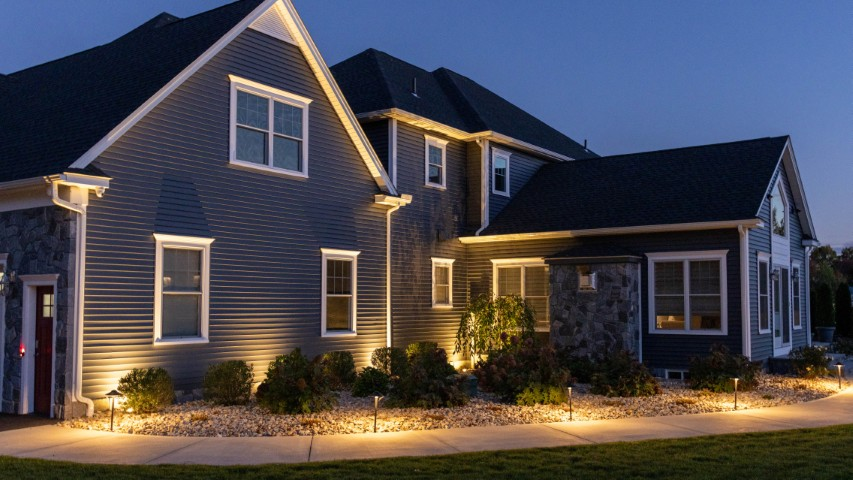
Professionally installed landscape lighting in western Massachusetts and northern Connecticut generally costs $200 to $275 per fixture, which puts most residential systems between $2,500 and $6,000.
Short Answer Long
Most homeowners in our service area spend $2,500 to $6,000 on a professionally installed low-voltage LED system. Per fixture, plan on $200 to $275 installed. That number covers the fixture, the buried cable feeding it, the labor to set and aim it, and its share of the transformer.
National cost guides land in a similar neighborhood but report one blended figure. They put the average installation cost at around $3,500, with most homeowners paying $2,000 to $6,000. A 2026 Massachusetts price guide gets closer, quoting $3,000 to $7,000 for a professional system, or $100 to $350 per fixture, with labor making up 40 to 60 percent of the total.
That Massachusetts range reflects Boston-area labor rates, the same distortion we flagged when we priced hardscaping and landscape design. Crews working the Springfield and Hartford corridor price under it, which is why homeowners here should look at the lower half of any statewide number.
Why One Average Number Doesn’t Get You Far
| What You’re Pricing | National Averages | Western MA & Northern CT |
|---|---|---|
| Per fixture installed | $80 to $300 | $200 to $275 |
| Small starter system | $800 to $2,500 | $1,500 to $3,000 |
| Typical residential system | $2,000 to $6,000 | $2,500 to $6,000 |
| Whole-property design | $7,000 to $10,000+ | $6,000 to $12,000+ |
| Labor share of the total | 40 to 60 percent | 40 to 60 percent |
Lighting is quoted by the unit and then totaled, the way a painter prices by the room. Two houses on the same street can sit $2,000 apart because one owner wants four trees uplit while the other wants a walkway lit. So the more useful question is “How many fixtures does your property need, and what types?”
Landscape Lighting Cost by Fixture Type
| Fixture Type | Installed Cost Each | What It Does |
|---|---|---|
| Path light | $215 to $275 | Lights walkways, steps, and bed edges |
| Uplight or spotlight | $200 to $250 | Washes tree trunks, stonework, and house facades |
| In-ground well light | $250 to $300 | Same effect as an uplight, set flush so mowers pass over it |
| Hardscape and step light | $175 to $250 | Tucks under wall caps and stair treads |
| Downlight or moonlighting | $250 to $350 | Mounts high in a tree or eave and casts light downward |
| Floodlight or security light | $200 to $275 | Covers a driveway, garage bay, or side yard |
Downlighting is the outlier because it requires extra labor. A fixture set twenty-five feet up in a hardwood means ladder work, a mount that will not girdle the tree as it grows, and cable secured up the trunk. The fixture may cost the same as an uplight sitting in a mulch bed. The hour it takes to place it does not.
What a Full System Costs
| System | Fixture Count | Installed Cost |
|---|---|---|
| Front entry and one or two features | 6 to 10 | $1,500 to $3,000 |
| Front of house plus main features | 12 to 20 | $3,000 to $6,000 |
| Whole property, front and back | 25 or more | $6,000 to $12,000+ |
The middle tier covers most of what gets installed around here: the front walk, the entry, two or three specimen trees, a wash across the front of the house, and lighting on a patio or seating wall out back. A crew places 15 to 25 fixtures in a day, so the majority of these projects are a single visit.
What You Pay For Besides the Fixtures
- Transformer: $300 to $500 for the unit, or $500 to $700 installed. It gets sized with headroom above the total wattage so fixtures can be added later without replacing it.
- Direct burial cable: 12-gauge at $0.40 to $0.80 per foot. Gauge matters more than it sounds. Undersized cable dims the last fixtures on a long line.
- Connections: Waterproof, gel-filled connectors instead of wire nuts, which corrode in wet soil and cause most of the outages we get called about.
- Timer or smart control: Often part of the transformer, with app control adding $100 to $300.
- Design: A walk of the property after dark, where fixture placement gets decided before anything goes in the ground.
Why Fixture Metal Influences the Ten-Year Cost
- Brass-plated fixtures cost $15 to $40 each and can corrode within three to five years.
- Solid brass and copper cost $80 to $300 and last 15 to 25 years, and they develop a patina that protects the metal rather than pitting it.
A system that needs replacing in year four means paying for installation twice, and the second one costs more than the first because someone has to pull out the old cable before laying new. When two lighting quotes differ by $1,500, fixture metal is usually most of the gap.
What New England Weather Does to a Lighting System
Outdoor lighting exists in one of the harder environments a product can face, and our winters sharpen it. Fixtures move. Frost heave lifts path lights out of alignment over a season, plows and shovels catch anything set near a walk or drive, and mowers find the rest in the summer. Spring service here means re-aiming fixtures and cleaning lenses, not swapping a bulb and leaving.
Freeze-thaw devours the connections too. Soil expands and contracts around buried cable all winter, which is why connector type and burial depth on a quote deserve a look. Low-voltage cable generally goes at least six inches down in lawn and bed areas, deep enough to stay clear of aeration and edging.
Transformer settings also need attention twice a year, once in spring and once in fall, because sunset shifts by more than four hours between June and December.
Lighting Earns Its Keep in the Months You Use the Yard Least
In Southwick, December sunset arrives before 4:30. For six weeks on either side of the solstice, the property is dark before most people get home from work. Lighting is the one landscape investment that gives something back on those evenings, as a view from the kitchen window and as footing on an icy front walk. Operating costs are small; a ten-fixture LED system uses roughly $3 to $8 of electricity a month.
That seasonal math is a large part of why lighting pencils out better in New England than the national guides suggest. Sunbelt homeowners light a yard they already use. Here, lighting extends the calendar.
Adding Lighting to a Hardscape or Planting Project
Lighting costs less as part of a build than as a retrofit, and the difference is not small. Sleeve for cable goes under a patio or walk while the base is still open. Hardscape lights set into wall caps and stair treads while the wall is going up. Cable reaches planting beds before mulch goes down. Do the same work a year later and someone is lifting pavers, cutting into finished stone, or trenching across a lawn that just filled in.
Because the same crew handles the hardscape, the plant installation, and the lighting, cable paths get planned before the first shovel goes in. It is the same reason we suggest folding fire features and seating walls into the original build, and the same logic behind our breakdown of what a full landscape installation costs.
What It Costs to Own
- Electricity: About $3 to $8 a month for a ten-fixture LED system.
- Annual service: $100 to $400 for a plan covering inspection, fixture cleaning, re-aiming, and seasonal timer changes.
- Repairs as needed: $20 to $600, averaging around $250, with labor at $80 to $120 an hour and a minimum visit charge of $75 to $150.
- Replacement timeline: Professional-grade LED fixtures last 10 to 15 years, transformers 8 to 12, and buried cable 15 or more.
When to Install
Lighting goes in any time the ground is workable, roughly April through the first hard freeze in December. Fall is the strongest window and the least obvious one. Dark arrives early enough that you see the system doing its job the same week it goes in, and lighting schedules open up after the June rush. If the lighting is part of a larger landscape renovation or design and installation project, it gets sequenced with the build instead of quoted separately.
Questions to Ask Before You Hire
- Are the fixtures solid brass or copper, or are they plated?
- What gauge is the cable, and how is each fixture connected to it?
- How is the transformer sized, and how much spare capacity does it leave for adding fixtures later?
- Will you walk the property after dark before anything gets placed?
- What does the warranty cover on fixtures versus labor, and for how long?
- Is annual service available, and what does a visit include?
Get a Number for Your Property
Lighting pricing only gets accurate once someone stands in your yard after sunset and counts what deserves light. Scott has been doing that on properties around Southwick, Westfield, Agawam, and across the Connecticut line since 2007, and the crew that designs the system is the crew that installs it. Reach out about landscape lighting and we will walk the property with you, then put a fixture count and a number in writing.
Frequently Asked Questions
How much does landscape lighting cost per fixture?
Professionally installed landscape lighting costs $100 to $275 per fixture in western Massachusetts and northern Connecticut. Path lights sit at the low end at $75 to $150. Downlights mounted high in a tree reach $300 to $600, mostly because of the ladder work.
How many fixtures does a typical yard need?
Most front-of-house systems use 12 to 20 fixtures covering the walkway, entry, two or three trees, and a wash across the facade. A single entry with one specimen tree can look finished with six. Whole-property designs generally start around 25.
Is it cheaper to add lighting during a patio or planting project?
Yes. Cable sleeve goes under a patio while the base is open, and hardscape lights set into wall caps as the wall goes up. Retrofitting later means lifting pavers or cutting into finished stone, which adds labor a coordinated build avoids entirely.
Do I need a permit for landscape lighting in Massachusetts or Connecticut?
Low-voltage 12-volt systems generally do not need a permit. Line-voltage 120-volt work, or adding a dedicated outdoor circuit, must be done by a licensed electrician and typically does need one. Electrical permits in Hartford County range from $40 to $200.
How long does a professional landscape lighting system last?
Solid brass and copper fixtures last 15 to 25 years. LED lamps last 10 to 15, transformers 8 to 12, and buried cable 15 or more. Plated and die-cast fixtures often fail within two to five years in our freeze-thaw climate.
What does it cost to keep landscape lighting on?
Roughly $3 to $8 a month in electricity for a ten-fixture LED system. Add $100 to $400 a year if you want a service plan covering spring re-aiming, lens cleaning, and seasonal timer changes.
Share with your followers: