
Blog Post
What Is Hardscaping? Hardscaping vs. Landscaping
October 6, 2026
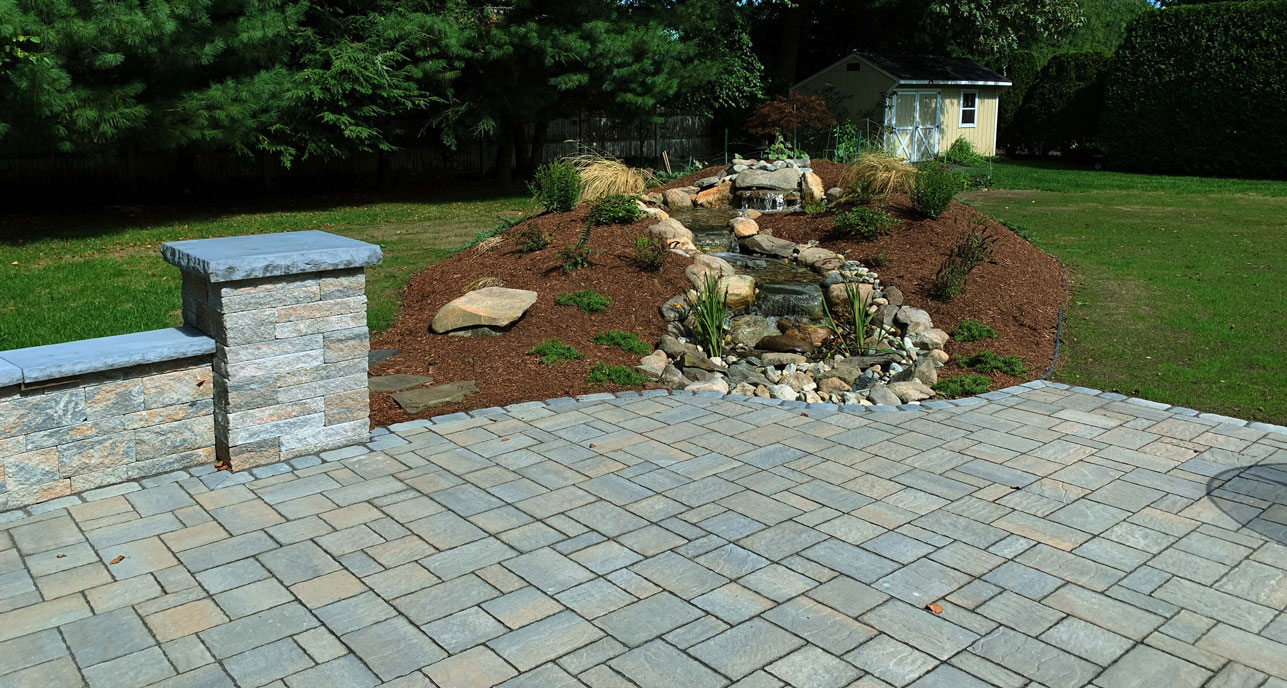
Hardscaping is the non-living, structural part of a yard, such as patios, walkways, retaining walls, steps, and fire pits made from stone, pavers, brick, concrete, or wood. Landscaping usually refers to the living part: lawns, trees, shrubs, and flower beds.
A good outdoor space needs both. In western Massachusetts and northern Connecticut, how the two are planned and installed together has a lot to do with how the yard looks after a few winters.
Homeowners usually ask about the difference right before they start a project. They want to know which contractor to call, how much to budget, and what to do first. Tynic Landscaping has installed both hardscapes and plantings since Scott Lamon founded the company in Southwick in 2007. Here’s how we explain it to clients.
Hardscape vs. Softscape vs. Landscape
Part of the confusion comes from the word “landscaping,” which people use in two ways. Some use it for the entire outdoor space, including patios and walls. Others use it for plants and lawn only, as in “hardscaping vs. landscaping.” Both uses are correct, which is why the industry adds a third term.
- Landscape is the complete outdoor environment: every surface, structure, and plant on the property.
- Hardscape is the non-living framework inside that landscape, such as stone, pavers, concrete, and walls.
- Softscape is the living layer, such as grass, trees, shrubs, flowers, and the soil that supports them.
When someone asks “what is hardscape in landscaping,” the answer is that hardscape is one of the two halves that make up a landscape.
Hardscaping vs. Landscaping at a Glance
| Hardscaping | Landscaping (Softscape) | |
|---|---|---|
| What it is | Non-living structures and surfaces | Living plants and ground cover |
| Common materials | Concrete pavers, natural stone, brick, poured concrete, gravel, wood | Sod, seed, trees, shrubs, perennials, mulch, topsoil |
| How it changes | Holds its shape if the base underneath is sound | Grows, fills in, and changes with the seasons |
| Upkeep | Periodic: joint sand, cleaning, resetting shifted units | Ongoing: mowing, pruning, watering, mulching |
| Upfront cost | Higher, due to excavation, base material, and labor | Lower for most projects of similar size |
| Install order | Usually first | After grading and hardscape are finished |
| Main job | Usable space, access, grade changes, drainage | Shade, privacy, color, erosion control, curb appeal |
Common Hardscape Features
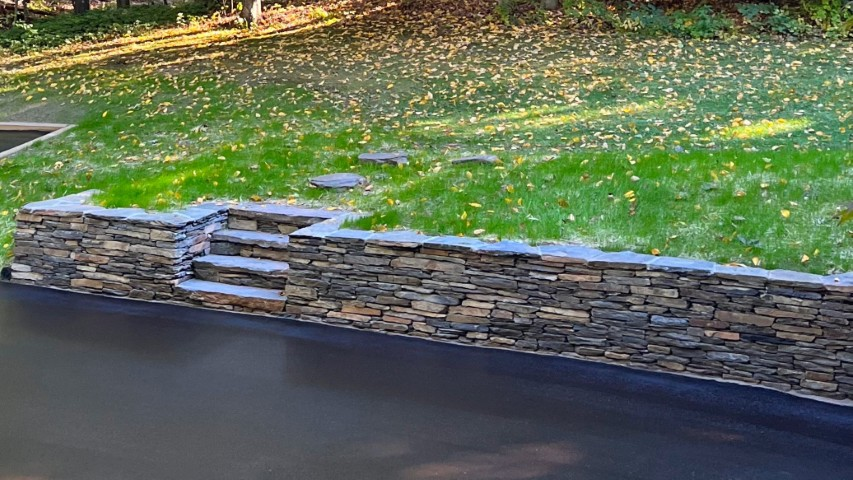
Patios and walkways come to mind first, but the category is broader than that. Retaining walls hold back soil on sloped lots, which are common in hillier towns like Simsbury and Avon. Seating walls do double duty as structure and extra seating around a patio or fire pit.
Typical hardscape projects include:
- Paver, bluestone, and natural stone patios
- Walkways and garden paths
- Retaining walls and seating walls
- Steps and landings
- Fire pits and outdoor fireplaces
- Outdoor kitchens
- Water features
- Driveways and borders
Decks, fences, and pergolas also count as hardscape because they’re non-living structures. Water features blend stonework with plants, and Tynic installs them as part of larger hardscape and planting projects. For businesses and property managers, Tynic also handles commercial hardscapes and plantings. If you’re pricing any of these, our guide to how much hardscaping costs breaks down local numbers by project type.
Common Landscaping (Softscape) Features
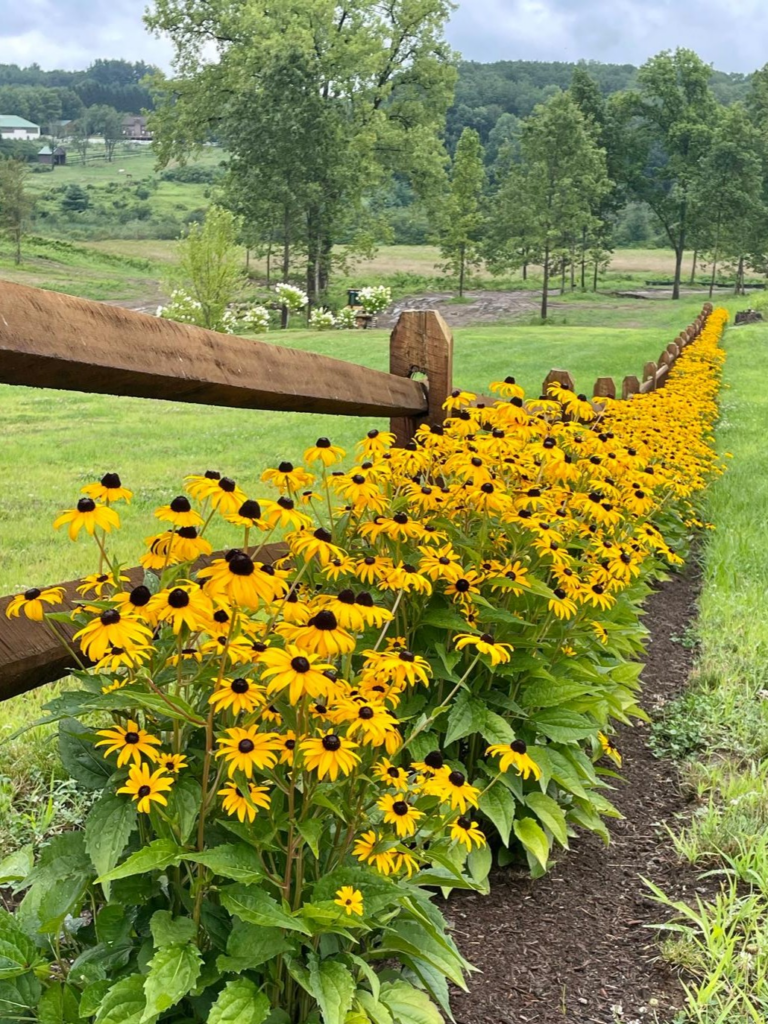
Softscape covers everything that grows. For most properties, that means a mix of:
- Lawns, whether sod or seed
- Trees, including shade and ornamental varieties
- Shrubs and privacy screens
- Perennial and annual flower beds
- Foundation plantings along the house
- Ground covers, mulch, and planting soil
Softscape also includes the care required to keep it alive. A new lawn installation or bed of shrubs needs watering, pruning, and seasonal attention for years afterward, which is where landscape maintenance comes in. For planting projects, see our breakdown of landscaping installation costs and our plant installation services.
Why Hardscape Still Needs Care in New England
Many articles describe hardscaping as a one-time upgrade that never needs attention. That’s closer to true in the South and on the West Coast. In our part of the country, winter makes it more complicated.
Water in the soil expands when it freezes. Building codes put frost depth for footings at 42 inches in most of Connecticut and 48 inches in Massachusetts, and the ground here freezes and thaws many times between December and March. When the base under a patio is too thin or holds water, those cycles push some pavers up and let others sink. That’s why a properly installed patio in this region sits on an 8- to 12-inch compacted gravel base, compared to about 4 inches in milder climates.
Even with a good base, New England hardscape needs a little yearly attention:
- Joint sand between pavers breaks down and washes out over several seasons, so it needs to be topped off.
- Shovels and plow blades catch on raised edges. Flush transitions and solid edge restraints help, especially where a walkway meets a driveway.
- De-icers can be hard on some concrete and natural stone surfaces. Check what your paver or stone manufacturer recommends before winter.
- Drainage matters more here than almost anywhere. Water that pools against a wall or patio edge turns to ice and speeds up heaving.
Hardscaping still takes far less work than a lawn or garden bed. Think a few hours a year instead of a few hours a week. But the installation quality you can’t see — meaning the base, the grading, and the drainage — decides whether that is true.
Hardscape Materials That Hold Up in New England
Material choice matters as much as the base underneath it. Here’s how common options handle freeze-thaw cycles and winter salt:
Concrete pavers are made to an industry standard (ASTM C936) that covers strength, water absorption, and freeze-thaw durability. The joints between units allow the surface to flex with minor ground movement, and a paver that cracks or heaves can be lifted and reset without tearing out the patio.
Bluestone, quarried in New York and Pennsylvania, is a regional favorite for patios, walkways, and steps. It’s dense and long-lasting, but lower grades can flake when water gets between layers and freezes. Ask about the grade and thickness before you commit.
Granite and fieldstone are among the hardest options available. Both handle freeze-thaw cycles and de-icers well, which makes them a good fit for steps, walls, and edging.
Poured concrete costs less upfront, but a single slab can’t flex. When the ground moves, it cracks. Salt can also flake the surface, especially in the first winter.
Clay brick works outdoors when it’s rated for severe weathering (look for Class SX under ASTM C902). Standard wall brick isn’t made for ground contact and breaks down quickly in our winters.
Gravel drains well and moves with frost without cracking. The tradeoff is that it shifts under shovels and plows and needs to be topped off over time.
Which Comes First: Hardscaping or Landscaping?
Hardscape goes in first on almost every project. Here’s why:
- Equipment damages plants and soil. Excavation for a patio or wall requires skid steers and heavy equipment. Anything planted beforehand gets trampled, and the surrounding soil gets compacted.
- Grading sets the water flow. The slope of a patio or walkway determines where rainwater and snowmelt flow. Planting beds need to follow that grade, not fight it. On lower ground near the Connecticut River, many projects begin with grading or drainage work before a patio or planting plan is even in place.
- Some lines have to go under the stone. Conduit for landscape lighting and sleeves for irrigation are much easier to lay before pavers go down than to add after.
- Plants look better around finished edges. Bed lines, shrub spacing, and tree placement all relate to where the patio, path, and walls end up.
The one exception is mature trees you plan to keep. Their root zones should be mapped and protected before any digging starts.
Timing a Combined Project
The calendar can work in your favor. September and October are good months to plant trees and shrubs here, because cooler air is easier on new plants while the soil is still warm enough for roots to settle in. When a patio or wall wraps up in late summer, the beds around it can go in during that fall window. By spring, the plants have had a head start, and the hardscape has already been through one winter.
Tynic’s growing season lasts from April through mid-December. Reaching out in winter or early spring gives you the most flexibility in scheduling for a project that includes both.
Where Hardscaping and Landscaping Meet
The transitions between hard and soft surfaces are where many outdoor projects go wrong. A few examples:
- Soil and mulch in a bed next to a patio should sit below the paver surface, so water drains away instead of washing across the stone.
- Shrubs planted too close to a walkway can crowd it within a few years. Spacing should account for mature width, not nursery-pot size.
- Shallow-rooted trees, such as many maples, can lift pavers as their roots grow. Tree placement near patios needs a plan.
- Retaining walls need gravel backfill and drainage behind them. Without it, soil above the wall will be waterlogged, and plants will struggle.
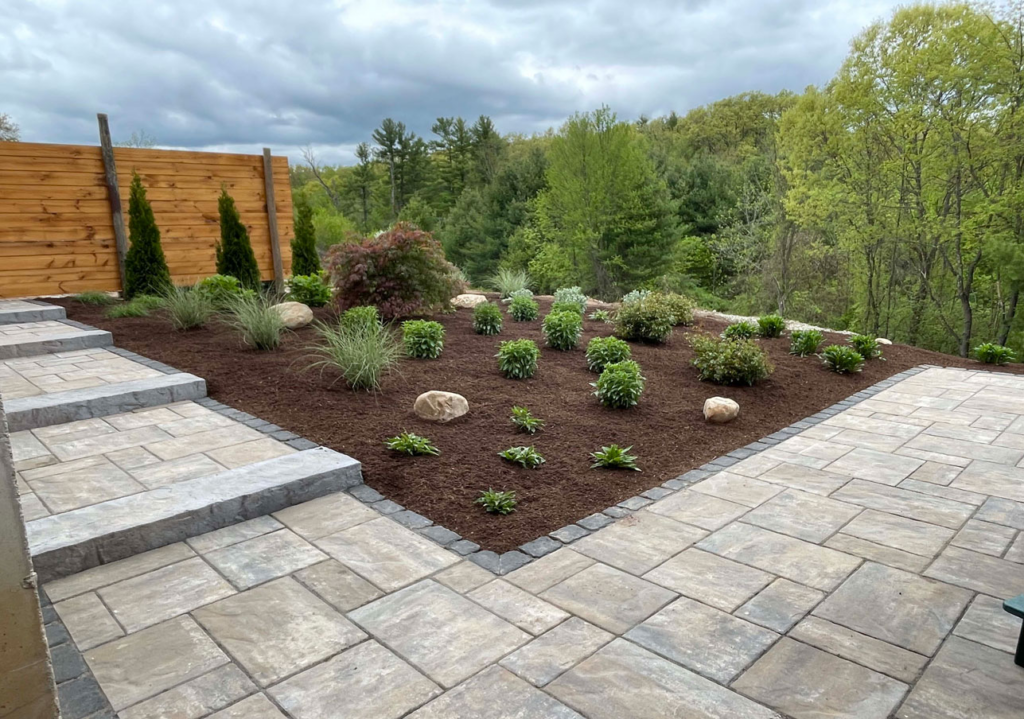
When a homeowner hires one company for the patio and another for the plantings, each crew finishes its half and nobody owns the seam between them. Tynic’s crews handle both. One recent client needed a patio, stairs, and a walkway to their pool on a steep yard. Along with the stonework, Scott recommended where to plant, and the crew cleaned up and re-seeded the lawn once the hardscape was done. That’s how our landscape design and installation process is meant to work: the grading, the edges, and the planting plan all come from the same team.
Deciding Where to Put Your Budget
The right starting point depends on what isn’t working in your yard now.
Hardscape usually comes first if you can’t use the space. That might mean there’s no flat place to sit, a slope is eroding, a path turns to mud every spring, or you want room to host.
Landscaping usually comes first if the yard is usable but bare. That might mean you need privacy from neighbors, the front of the house lacks curb appeal, or the lawn is thin and patchy.
Many homeowners split a project into phases, with hardscape one year and plantings the next. That works well, as long as the full design is drawn up at the start. Phase one should leave the grades, conduit, and bed lines ready for phase two.
Questions to Ask Before You Hire
Before you sign with a contractor for either side of the project, ask:
- How deep will the base be, and what material will you use?
- Which paving material do you recommend for my yard, and how does it handle salt and frost?
- How will water drain away from the patio, walls, and house?
- Do you handle both hardscape and plantings, or subcontract one of them?
- Will lighting conduit or irrigation sleeves go in before the pavers?
- Does this retaining wall need a permit or an engineered design in my town?
- What happens if pavers settle or heave in the first few years?
Plan the Whole Yard With One Team
Tynic Landscaping designs and installs hardscapes and plantings for homeowners, businesses, and property managers across western Massachusetts and northern Connecticut. Scott Lamon started the company in Southwick in 2007 and still works in the field, and readers have voted Tynic Reader Raves Best Landscaper twice. The same standards apply whether we’re setting a retaining wall or planting a privacy screen. Call (413) 569-9633 or request a quote to talk through your project.
Frequently Asked Questions
What is hardscaping in landscaping?
Hardscaping is the non-living part of a landscape, such as patios, walkways, walls, steps, and fire pits. The living part, meaning plants and lawn, is called softscape. Together they make up the full landscape.
What is the difference between hardscape and softscape?
Hardscape uses materials like stone, pavers, concrete, and wood to create structure and usable space. Softscape uses living materials like grass, trees, shrubs, and flowers. Hardscape holds its shape over time, while softscape grows and changes with the seasons.
Is gravel considered hardscape?
Yes. Gravel is a non-living material, so gravel paths, driveways, and patio bases all count as hardscape. It’s one of the few hardscape surfaces that drain through rather than shed water.
Are mulch and boulders hardscape or softscape?
Boulders are hardscape because they’re non-living and permanent. Wood mulch is usually grouped with softscape, since it’s organic, breaks down, and exists to support planting beds. Stone mulch sits in a gray area, and designers sometimes count it as hardscape.
Should hardscaping or landscaping be done first?
Hardscaping should almost always go first. Heavy equipment damages plants and compacts soil, and patio and wall grading determines where planting beds and drainage should go.
Do I need separate contractors for hardscaping and landscaping?
Not necessarily. Some companies do only one, but hiring a single company for both keeps the design, grading, and transitions between surfaces under one plan. Tynic Landscaping handles both across western Massachusetts and northern Connecticut.
Share with your followers: