
In western Massachusetts and northern Connecticut, a professionally installed fire pit typically costs $1,500 to $15,000, while an outdoor fireplace costs $4,000 to $20,000 or more. A simple wood-burning kit on a suitable existing patio sits near the low end. Custom stonework, gas connections, seating walls, and a new patio move the budget higher.
These are planning ranges for permanent, professionally installed fire features, not portable metal fire bowls. The price for your yard depends on what you build, what is already in place, and what the site needs underneath it. Local fire rules matter, too, especially if you want to burn wood.
How Much Does a Fire Pit Cost?
For a built-in fire pit in western Massachusetts or northern Connecticut, budget roughly $1,500 to $15,000 installed. The biggest differences are whether you’re starting with a kit or custom stonework, whether the feature burns wood or gas, and whether you’re adding a patio or seating.
| Fire Pit Type | Typical Scope | Estimated Installed Cost |
|---|---|---|
| Wood-burning kit | Manufactured block or paver kit with a suitable liner and prepared base; often built on an existing patio or gravel area | $1,500 to $5,000 |
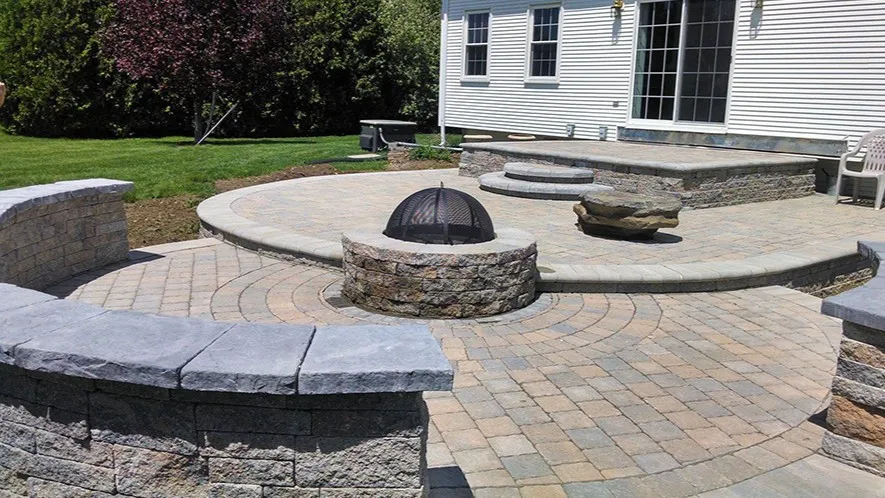
| Custom stone fire pit | Site-built stone or paver surround; may include a short seating wall and small surrounding patio | $5,000 to $12,000 |
| Natural gas fire pit | Burner, ignition components, suitable surround, and gas connection; trenching and permits depend on the site | $6,000 to $15,000 |
A kit fire pit is a practical starting point when you already have a suitable place to put it. The feature itself is straightforward, so more of the budget goes toward preparing the base, assembling the materials, and protecting the masonry from heat.
A custom stone fire pit becomes a larger project when you add a seat wall, a dedicated gathering area, or natural stone to match the house. A gas fire pit adds another layer of planning: the burner and controls have to work with an appropriate fuel supply. A long gas run or difficult trenching can significantly affect the price. A propane model may avoid a permanent line from the house, but its equipment and tank placement need to be planned separately.
How Much Does an Outdoor Fireplace Cost?
An outdoor fireplace is usually more expensive because it has a larger structure, a firebox, and a chimney or manufacturer-designed venting system. Expect $4,000 to $20,000 or more installed for the types of projects described below.
| Outdoor Fireplace Type | Typical Scope | Estimated Installed Cost |
|---|---|---|
| Prefabricated or modular fireplace | Manufactured firebox and chimney components, an appropriate footing, and a masonry or stone veneer | $4,000 to $9,000 |
| Custom masonry fireplace | Site-built firebox and chimney, masonry or natural stone, supporting footing, and hearth | $10,000 to $20,000+ |
A prefabricated fireplace uses manufactured components under the visible finish. It can offer the look of a stone fireplace without having to lay every part of the structure from scratch. A custom masonry fireplace offers greater freedom in scale, shape, and material, but the work takes more time and requires a foundation designed to support the load.
If you’re deciding between a pit and a fireplace, think about how you want people to gather. A fire pit allows seating on multiple sides. A fireplace anchors one end of a patio and creates a more defined outdoor room. The right choice depends on your layout as much as your budget.
Why Are Online Cost Averages So Much Lower?
National guides cover a much wider range of purchases. HomeAdvisor, for example, reports an average of about $850 for a fire pit and $3,000 for an outdoor fireplace. Those figures include installed projects, but the mix also covers smaller, simpler features. They aren’t priced the same as a custom stone installation with a prepared foundation, utilities, and surrounding hardscape.
Here in New England, freeze-thaw cycles make excavation, drainage, and support especially important. That doesn’t mean every fire pit needs the same base depth. A small kit on an existing patio, a gas feature with underground piping, and a heavy masonry fireplace can have very different foundation requirements. A contractor should size the support to the product, the site, and applicable code.
When comparing quotes, look past the final number. Check whether each includes excavation, base or footing construction, a heat-rated liner or firebox, utility work, permits, and repairs to nearby pavers or landscaping. An estimate that omits those items may appear less expensive without covering the same project.
What Changes the Installation Price?
Base or Footing
A fire pit needs stable support and materials appropriate for high temperatures. A heavy fireplace needs a footing designed for its weight and local conditions; frost protection may be required. Soil, drainage, and slope affect underground work.
Material and Design
Concrete block and standard pavers often cost less than hand-laid natural stone. Curved walls, specialty caps, large hearths, and detailed masonry also add labor.
Fuel and Utility Distance
Wood-burning features generally avoid gas piping. Natural gas requires the right burner, controls, and a suitable connection. The distance to the gas supply, trenching conditions, and any required electrical work can increase costs.
Space Around the Fire
A fire pit on an existing suitable patio is a different project from a new patio with a seat wall and lighting. As a reference, Tynic’s hardscaping cost guide estimates local paver patios at roughly $18 to $40 per square foot installed, depending on material and scope. A full gathering area can be a bigger part of the budget than the fire feature itself.
Access and Permits
Sloped yards, ledge, poor drainage, and narrow gates can make excavation harder. Building, gas, and electrical approvals vary with the design and municipality, so permit requirements and fees should be confirmed before work begins.
Wood vs. Natural Gas vs. Propane: Which Should You Choose?
The cheapest fuel to install isn’t always the one you’ll enjoy using most. Consider the tradeoffs before picking materials or placing the feature.
| Fuel | What Affects Installation Cost | What It’s Like to Use |
|---|---|---|
| Wood | Usually avoids gas piping, but requires a fire-rated design and compliance with local burning rules | Real logs and a traditional fire; smoke, storage, and ash cleanup |
| Natural gas | Burner and controls, suitable gas supply, trenching, and licensed trade work where required | Convenient to turn on and off; no fuel tank to replace |
| Propane | Compatible burner and controls, with an approved location for a tank and fuel line | Similar convenience to natural gas, but the tank needs refilling or replacement |
Gas systems don’t all light the same way. Some use a manual ignition process, while others have electronic ignition and controls. Ask which equipment is included in the quote. For both wood and gas, the installation must follow the fire feature’s instructions and the rules that apply at your address.
Check Local Fire Rules Before You Build
This step can change the design you choose. Buying a wood-burning fire pit doesn’t automatically mean you can use it for recreational fires whenever you want.
Massachusetts
The Massachusetts Department of Fire Services says fire pits are subject to state open-burning rules unless they’re being used for cooking. Cooking fires have their own safety conditions, and some towns further limit or prohibit fire pits, chimineas, and outdoor fireplaces. Contact your local fire department before settling on a wood-burning design. The rules for recreational fires should not be confused with the rules for grilling or cooking.
Connecticut
The Connecticut Department of Energy and Environmental Protection says municipalities may impose limits on fire size, setbacks from buildings and property lines, lot size, or permit requirements. Smoke that creates a nuisance can also be prohibited. Connecticut advises burning only clean, unprocessed wood. Check with your town’s open burning official, fire marshal, or town hall.
Gas fire features also need to meet applicable installation and clearance requirements. Ask your contractor which building, gas, or electrical approvals are required and who is responsible for arranging them. It’s better to settle those questions before finalizing the patio layout.
Can You Add a Fire Pit to an Existing Patio?
Often, yes, but the existing patio must be suitable for the specific fire feature. A stable paver surface is only part of the check. The contractor also needs to assess the support beneath it, heat protection, available clearances, drainage, and the manufacturer’s installation requirements.
A small kit may work with limited changes when the base and surface are appropriate. A larger custom fire pit may require lifting pavers and building a separate supporting base. A full masonry fireplace is heavier still and should not be assumed to sit safely on a standard patio base.
Gas can make a retrofit more involved. Running a new line may require removing and resetting pavers, trenching beside the patio, or finding another approved route. Tynic’s fire feature installation service covers projects in which crews lift and reset pavers or connect a new feature to the existing space. The site visit is where we determine which approach makes sense for your yard.
Why Planning the Patio and Fire Feature Together Can Cost Less
A new patio is often the best time to build a fire feature. Excavation, equipment access, base preparation, and material deliveries can be coordinated instead of repeated. If you want natural gas, lighting, or an outdoor kitchen later, plan the routes for those utilities before the pavers go down.
For example, low-voltage lighting can be built into steps and seating walls during installation. Tynic’s landscape lighting cost guide explains what those fixtures add to a project. Designing the fire feature with the wider landscape layout also helps preserve comfortable walking space, seating distances, and room for future additions.
Our construction season usually runs from spring thaw to early winter, around April through mid-December, when the ground is workable. Fall can be a useful time to build before the next outdoor season, although schedules and pricing depend on the job. If you want your space ready for spring, start the conversation in late winter.
Questions to Ask Before Hiring a Contractor
- What’s included in the quoted price: excavation, base, footing, liner, utilities, and cleanup?
- How will you determine the right foundation and drainage for this location?
- Are the firebox, liner, burner, and surrounding materials approved for the intended use?
- Who handles gas or electrical installation, and who obtains any required permits?
- Have you checked the town’s fire restrictions and setback requirements for this design?
- Is the work performed by your own crew or by subcontractors?
- Can I see examples of fire features you’ve built that have been through several New England winters?
Plan Your Outdoor Fire Feature With Tynic
Scott Lamon founded Tynic Landscaping in 2007 and still spends time in the field. Our in-house hardscape crew builds patios, walls, and fire features across western Massachusetts and northern Connecticut, with the excavation and drainage these sites require.
Whether you want a wood-burning pit on an existing patio or a larger outdoor space centered on a fireplace, we’ll walk the property with you and discuss placement, materials, fuel, and the work around the feature. We’ll put together a proposal based on your site rather than a national average.
Request a complimentary estimate or call 413-569-9633 to get started.
Frequently Asked Questions
How much does a fire pit cost in Massachusetts?
In western Massachusetts, a professionally installed fire pit typically ranges from $1,500 to $15,000. A wood-burning kit on a suitable existing surface usually costs less than a custom stone feature with seating or a natural gas connection.
How much does an outdoor fireplace cost in Connecticut?
In northern Connecticut, the planning range is roughly $4,000 to $9,000 for a modular fireplace and $10,000 to $20,000 or more for custom masonry. The final price depends on the footing, materials, size, and access.
Is a gas fire pit more expensive than a wood-burning fire pit?
Usually, yes, at installation. Gas adds a burner, controls, and a suitable fuel connection. Natural gas may require trenching and licensed trade work. Wood often costs less to build, but it also requires firewood, ash cleanup, and attention to local burning restrictions.
Is a fire pit cheaper than an outdoor fireplace?
Usually. A built-in fire pit starts around $1,500 in our area, compared with roughly $4,000 for a modular outdoor fireplace. A large custom stone fire pit with gas and a seating area can cost more than a simpler fireplace.
Do I need a permit for an outdoor fire pit or fireplace?
It depends on the town, fuel, and construction. In Massachusetts, recreational wood fires may be subject to state open-burning limits and municipal restrictions. Connecticut municipalities set additional conditions for recreational fires. A built fireplace or gas connection may require separate construction or trade permits. Check with local officials before building.
Can you add a fire pit to an existing patio?
Yes, in many cases. The contractor needs to verify that the patio and underlying base suit the fire feature’s weight, heat, and clearance requirements. Gas lines, custom masonry, or a heavy fireplace may require additional excavation or a separate footing.